
The Center of the Reading
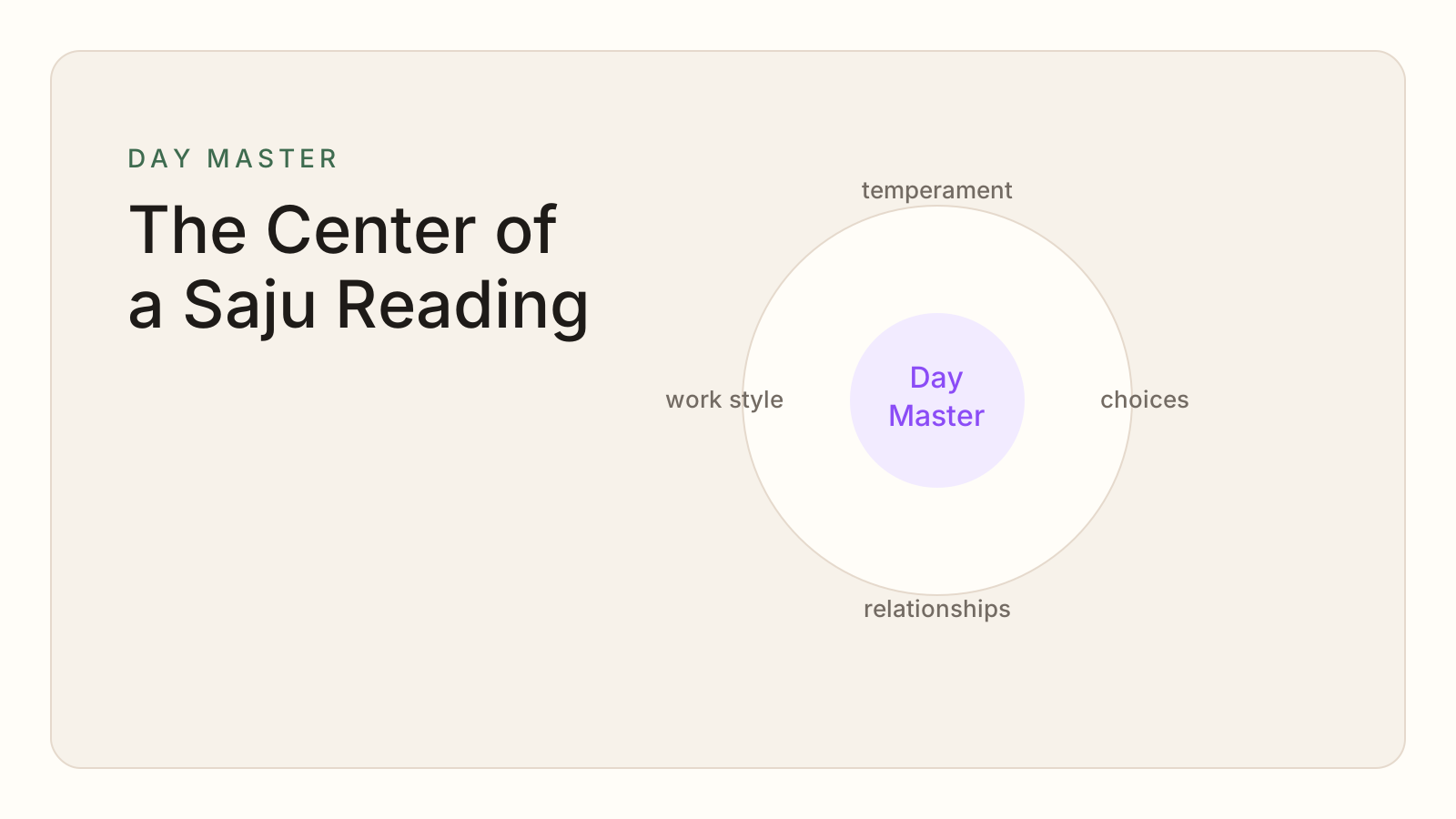
In Korean Saju, the Day Master is the heavenly stem of the day pillar. It is often treated as the central reference point of the chart.
That does not mean the Day Master explains everything about a person. It is not a personality shortcut. It is a center of gravity. The rest of the chart is interpreted in relation to it: the elements that support it, the patterns that pressure it, and the roles that form around it.
For beginners, the Day Master is one of the easiest places to start because it gives the chart a clear anchor.
Why the Day Master Matters
Saju contains many layers: pillars, stems, branches, Five Elements, Ten Gods, seasons, and relationships between positions. Without a central reference point, the reading can become a list of disconnected symbols.
The Day Master helps organize those symbols.
For example, the same element can mean different things depending on the Day Master. A certain stem may represent support for one person, pressure for another, expression for another, or resources for another. The Day Master is what makes those relationships readable.
This is why Palza treats the Day Master as a starting point, not a final answer.
The Ten Day Masters
There are ten possible Day Masters, based on the ten heavenly stems:
- Gap
- Eul
- Byeong
- Jeong
- Mu
- Gi
- Gyeong
- Sin
- Im
- Gye
Each has a traditional symbolic quality. Some are connected with Wood, some with Fire, Earth, Metal, or Water. Some have a more direct or expansive feeling, while others are more adaptive, focused, reflective, or precise.
In a modern reading, these symbols become temperament language. They can help describe how a person tends to initiate, respond, decide, protect, express, refine, or observe.
But the Day Master should never be read alone. A Day Master under strong seasonal support will feel different from the same Day Master under pressure. Context matters.
A Label Is Not Enough
The easiest mistake is to turn the Day Master into a label: “You are this type.” That can feel satisfying for a moment, but it is too flat.
A better reading asks:
- What is the Day Master’s natural quality?
- What season is it born into?
- Which elements support or challenge it?
- Which Ten Gods appear repeatedly?
- Where does the chart show momentum or strain?
These questions turn the Day Master into a living part of the chart instead of a fixed identity.
How Palza Translates the Day Master
Palza translates the Day Master into practical language. We care less about making someone memorize technical terms and more about helping them recognize patterns.
A Day Master reading may describe:
- Core temperament
- Preferred pace
- Decision style
- Relationship response
- Work rhythm
- Emotional recovery pattern
The point is not to say, “This is exactly who you are.” The point is to offer a useful mirror. A good reading should feel specific enough to reflect something real, but flexible enough to leave room for growth and choice.
Strength and Risk Together
Every Day Master pattern has a useful side and a risk side. Directness can become impatience. Flexibility can become over-adaptation. Precision can become harsh self-criticism. Depth can become avoidance. Stability can become resistance to change.
Palza’s tone keeps both sides together. A reading should not flatter someone without helping them see what needs care. It should also not criticize someone in a way that creates fear.
The best language is balanced: here is the strength, here is how it can become too much, and here is one practical way to work with it.
The Day Master in Self-Understanding
The Day Master is useful because it gives a person a starting point for reflection. It can help them ask better questions about themselves:
- Where do I naturally place my attention?
- What kinds of situations energize me?
- What kinds of pressure make me reactive?
- What do I need in order to make clearer choices?
That is the Palza approach to Saju. The Day Master is not a prophecy. It is a reference point for understanding how a pattern may move through a life.