
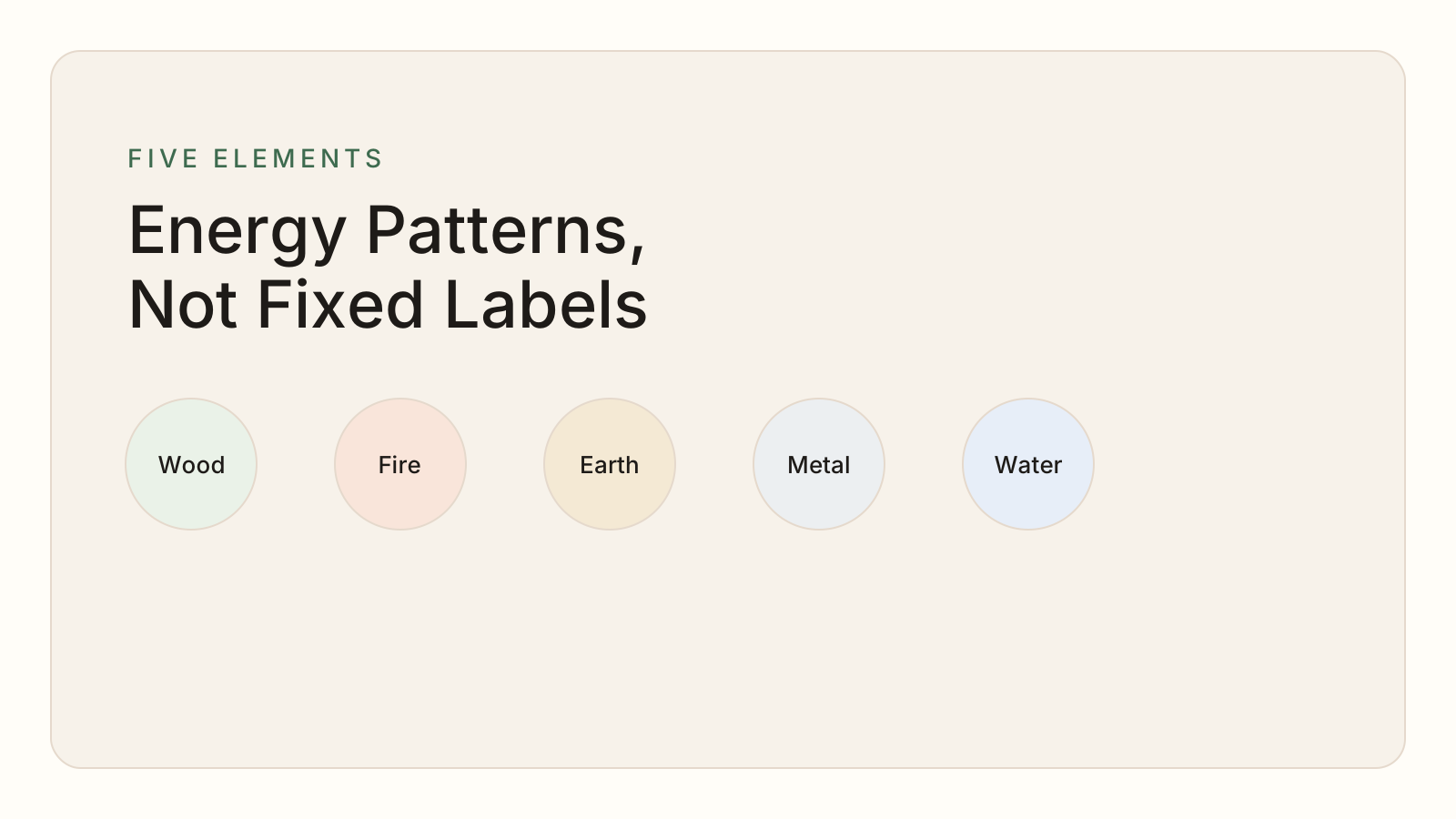
Elements as Patterns
The Five Elements in Saju are Wood, Fire, Earth, Metal, and Water. They are not physical substances in a literal sense. They are symbolic patterns used to describe movement, expression, stability, structure, reflection, and change.
In a modern self-understanding reading, the Five Elements are most useful when they describe how energy behaves. Where does a person naturally expand? Where do they become visible? Where do they stabilize, refine, or withdraw?
This makes the Five Elements one of the most approachable parts of Korean Saju.
Wood
Wood is often connected with growth, direction, initiative, planning, and movement toward possibility.
When Wood is strong in a chart, a person may be energized by development, new starts, learning, and forward motion. They may notice potential quickly and feel restless when things are too fixed.
The risk is overextension. Growth needs pacing. Too much Wood-like movement can create unfinished starts, scattered effort, or frustration when progress is slow.
In practical language, Wood asks: what is trying to grow, and what structure will help it grow well?
Fire
Fire is connected with visibility, warmth, expression, attention, joy, and emotional brightness.
When Fire is strong, a person may be energized by connection, enthusiasm, recognition, and the chance to make something felt. Fire can bring clarity and presence.
The risk is burnout or emotional overexposure. Fire needs rhythm. It can become too intense when every feeling, idea, or interaction has to be active at once.
In practical language, Fire asks: what needs to be expressed, and what helps that expression stay sustainable?
Earth
Earth is connected with stability, care, responsibility, grounding, and practical support.
When Earth is strong, a person may be good at holding things together. They may value reliability, continuity, and realistic steps. Earth can create trust because it does not move carelessly.
The risk is heaviness. Earth can hold on too long, delay change, or carry responsibilities that should be shared.
In practical language, Earth asks: what needs to be stabilized, and what needs to be released?
Metal
Metal is connected with structure, standards, refinement, boundaries, and decision.
When Metal is strong, a person may be good at cutting through noise, improving quality, and creating clear rules. Metal can support discipline, taste, and accountability.
The risk is rigidity. A strong standard can become too sharp when it leaves no room for context, experiment, or softness.
In practical language, Metal asks: what needs clearer form, and where has the standard become too narrow?
Water
Water is connected with reflection, depth, adaptability, memory, strategy, and inner movement.
When Water is strong, a person may notice what is hidden beneath the surface. They may think deeply, adapt quietly, and sense changes before they are obvious.
The risk is drifting or overthinking. Water needs direction. Without a container, depth can become avoidance or uncertainty.
In practical language, Water asks: what needs to be understood, and what action will give that understanding a shape?
Balance Is Not Always Equal
Many people assume a balanced chart means every element appears equally. In practice, balance is more nuanced. A chart can be useful and coherent even when one element is stronger than another.
The question is not simply, “Do I have all five?” The better question is, “How does this distribution behave?”
A missing element does not mean a missing life. A strong element does not mean guaranteed success. Each pattern points to a way energy may gather, thin out, or need support.
The Palza Approach
Palza uses the Five Elements to describe everyday patterns: energy, work style, emotional rhythm, relationship response, money mindset, and recovery.
The elements help make Saju readable. They turn abstract chart information into language someone can observe in daily life.
That is why the Five Elements are not about labeling a person. They are about helping a person notice what kind of balance supports better choices.