
The Short Answer
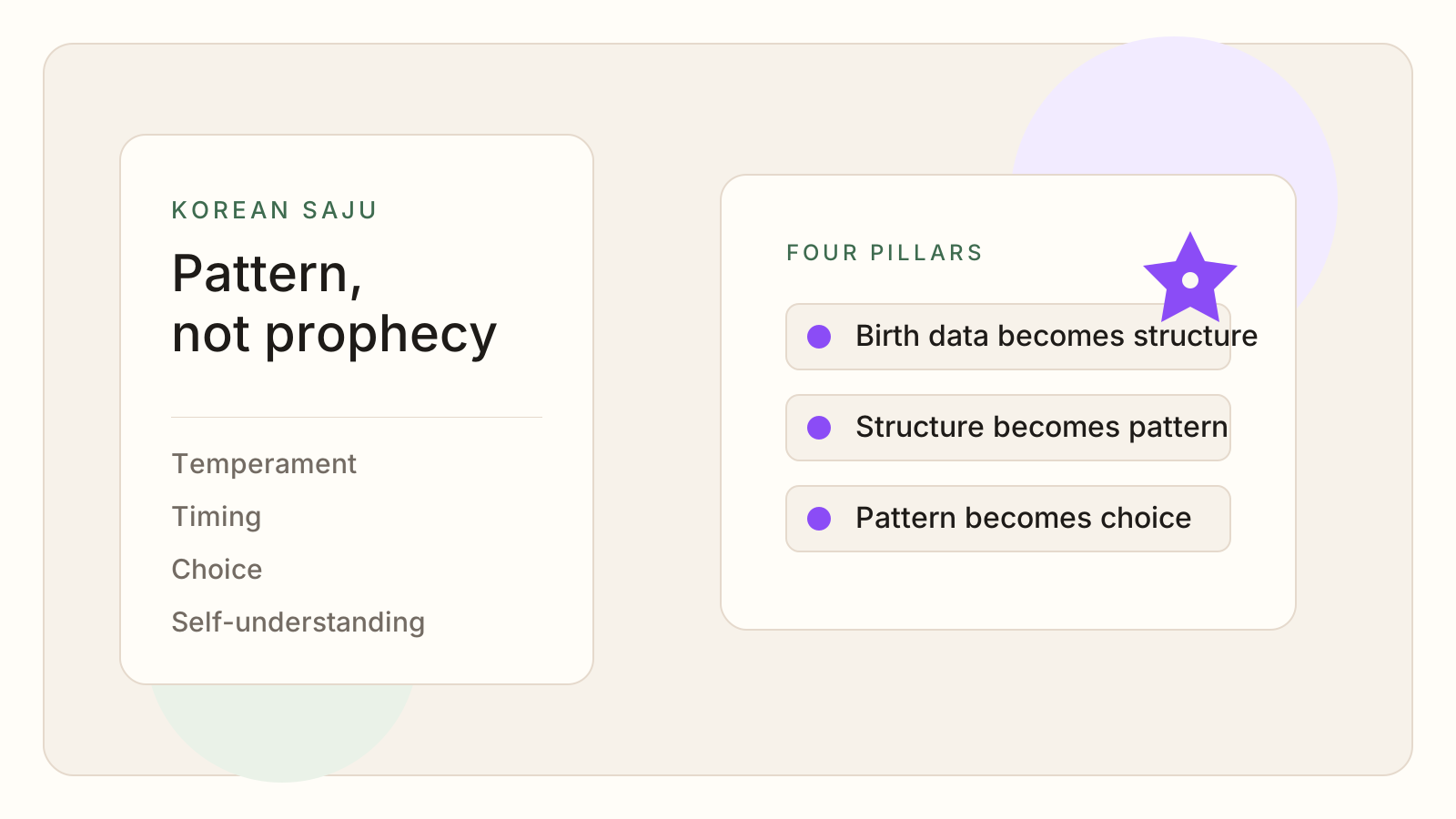
Korean Saju is often introduced as fortune telling, but that is not how Palza uses it. We treat Saju as a structured language for self-understanding: a way to describe temperament, timing, relationship patterns, work style, money mindset, and emotional rhythm.
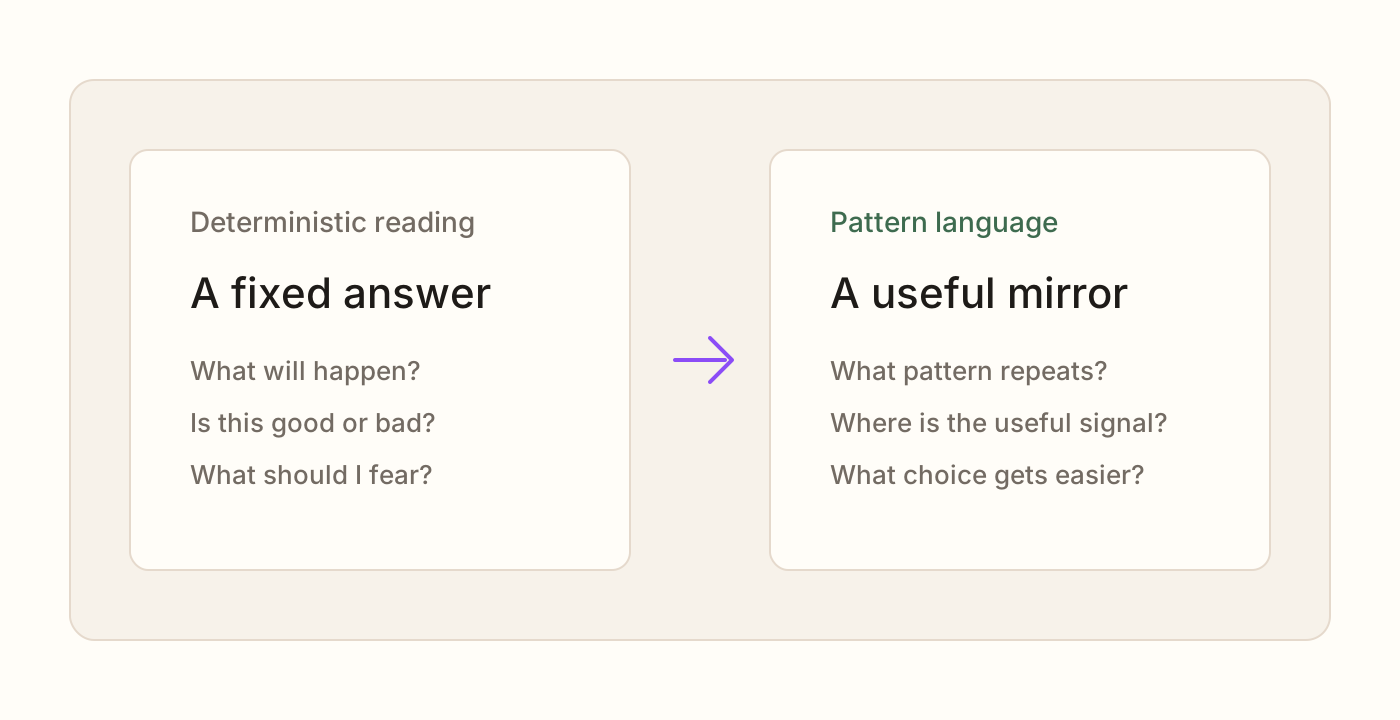
That distinction matters. A predictive reading asks, “What will happen to me?” A self-understanding reading asks, “What patterns do I tend to repeat, and what choices become clearer when I can name them?”
Palza is built around the second question.
What Saju Actually Reads
Saju begins with a person’s birth year, month, day, and time. These become the Four Pillars, a traditional framework made from heavenly stems, earthly branches, five elements, and relationships between symbolic positions.
That structure can sound abstract at first. In practice, a modern reading becomes useful only when those symbols are translated into life language. A Day Master can point to a person’s central temperament. Five Element balance can describe where energy gathers, where it may feel thin, and what kind of environment helps a person stay regulated. Ten Gods can describe patterns around independence, expression, responsibility, pressure, learning, resources, and social roles.
None of this needs to become a fixed verdict. The value is not in saying, “This is your fate.” The value is in giving someone better words for patterns they may already feel but have not clearly named.
Prediction Creates the Wrong Incentive
Fear-based fortune telling works by making uncertainty feel urgent. It often turns a reading into a warning: avoid this person, fear this year, expect this loss, wait for this lucky moment.
That kind of language is powerful, but it is rarely useful. It can make people outsource judgment at exactly the moment they need more clarity. It can also make symbolic information feel more precise than it really is.
Palza avoids that framing. We do not use Saju to guarantee success, predict disaster, decide relationships, diagnose health, or make financial calls. We do not treat a chart as permission to stop thinking.
Instead, we use Saju as a reflective system. A reading should help someone notice tendencies, not hand over authority.
A Better Reading Describes Patterns
A useful Saju reading should connect the traditional structure to ordinary experience.
For example, instead of saying someone has “bad luck in relationships,” a better reading might say that close relationships can become harder when responsibility takes over and emotional expression becomes too compressed. That is not a prophecy. It is a pattern statement. It gives the person something they can observe, test, and adjust.
Instead of saying someone is “destined to succeed in business,” a better reading might say that their chart emphasizes opportunity sensing and external activity, but that fast expansion needs cash flow discipline and clearer boundaries. Again, the point is not prediction. The point is sharper self-management.
The best Saju language should hold strength and risk together. A pattern is rarely only good or bad. The same quality that creates momentum can also create overextension. The same sensitivity that supports insight can also create hesitation. The same discipline that builds trust can become rigidity when conditions change.
Timing Is Not a Promise
Saju also includes timing language. Traditional readings may describe periods, cycles, or changing emphasis over time. Palza treats timing as context, not a promise.
A timing pattern can be useful when it helps someone ask better questions. Is this a season for expansion or consolidation? Is a familiar stress pattern becoming louder? Is there a better way to pace decisions, conversations, or commitments?
That is different from saying a specific event must happen. Palza’s position is simple: timing can support reflection, but it should not replace judgment.
What Palza Means by Self-Understanding
Self-understanding is not just personality labeling. It is the practical ability to notice how you tend to move through choices.
In Palza, a Saju reading is most useful when it helps answer questions like:
- Where does my energy naturally gather?
- What kinds of work environments bring out my strengths?
- What relationship pattern do I repeat when I feel pressured?
- How do I usually handle resources, money, risk, and stability?
- What helps me recover emotionally when I become overloaded?
These questions keep the reading grounded. They also make room for agency. A pattern can be strong without being permanent. A tendency can be real without being a sentence.
How to Read Saju Safely
When you read any Saju content, pay attention to the kind of language it uses.
Be careful with readings that make absolute claims. “You will fail,” “you must marry this type of person,” “money will definitely come,” and “this year is dangerous” are not reflective insights. They are deterministic claims.
Look for readings that explain the basis of an interpretation, translate technical terms into lived experience, include both strengths and risks, and end with practical choices. A good reading should leave you more grounded, not more afraid.
That is the editorial standard Palza is building toward.
The Palza Approach
Palza keeps the traditional structure of Korean Saju, but the product experience is modern. We care about the chart, but we care even more about the translation layer: the part that turns symbolic information into clear language about temperament, relationships, work, money, emotion, and choice.
The goal is not to make Saju less deep. The goal is to make it more responsible.
When Saju is used well, it becomes a mirror. It does not decide your life for you. It helps you see the shape of your own patterns with a little more clarity.
That is the version of Saju Palza is here to build.