
A Chart Before an Interpretation
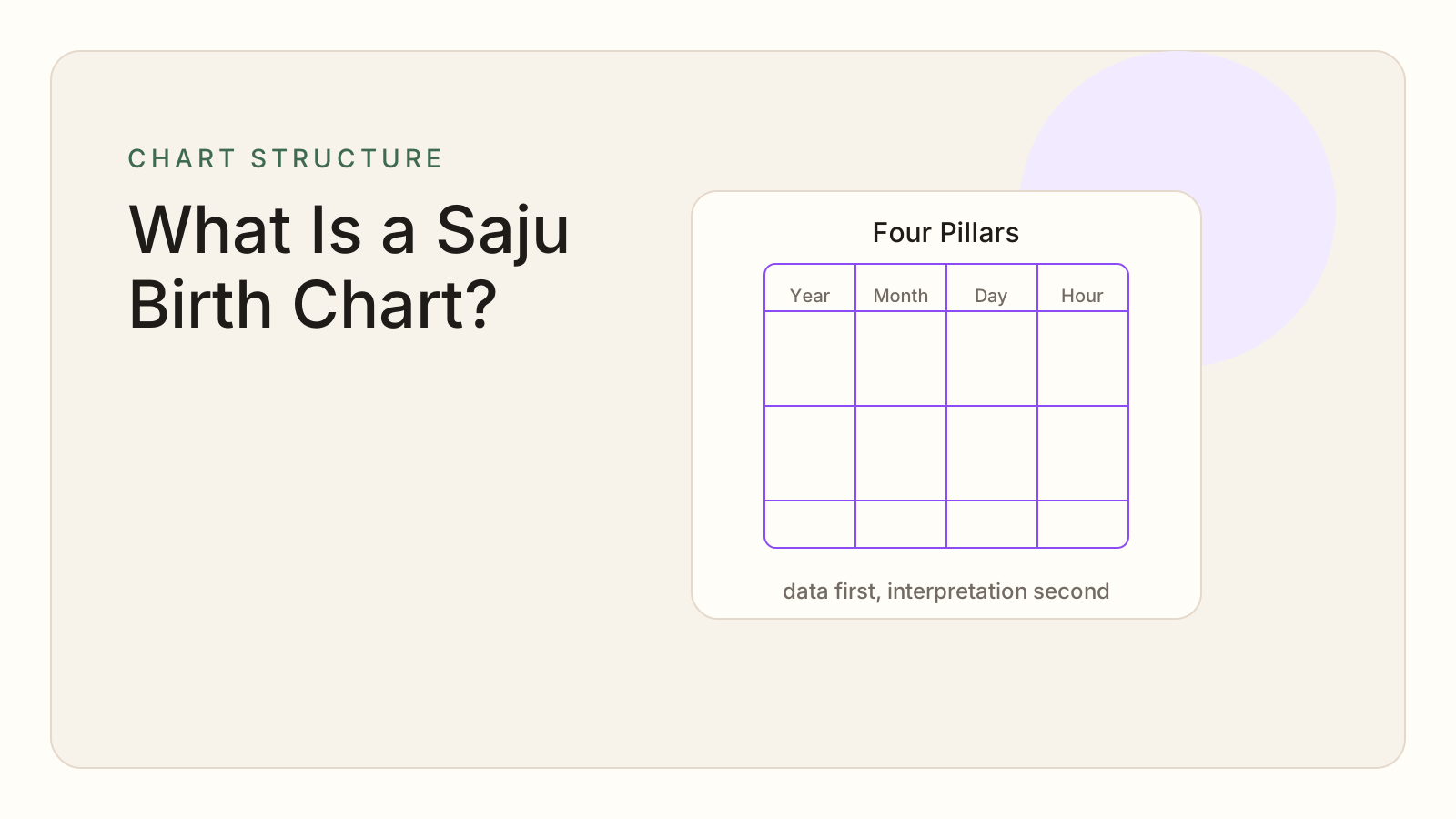
A Saju birth chart is the structured result of a person’s birth year, month, day, and time. Before any interpretation happens, the birth data is converted into the Four Pillars. Each pillar contains a heavenly stem and an earthly branch.
This structure matters because Saju should not begin with vague impressions. It begins with a chart. The chart gives the reading its foundation, and the interpretation should stay connected to that foundation.
Palza treats the chart as the data layer of a reading. The chart itself is not the whole experience, but it keeps the interpretation grounded.
What Appears in a Saju Chart
A basic Saju chart usually includes four pillars:
- Year pillar
- Month pillar
- Day pillar
- Hour pillar
Each pillar has two parts: a heavenly stem and an earthly branch. These symbols connect to the Five Elements, yin and yang, seasonal strength, and relationships between positions.
Many charts also show derived information such as Ten Gods, element distribution, and branch relationships. These layers help translate the chart from symbolic structure into practical language.
For example, the chart may show that a certain element appears strongly, that another element is missing, or that a relationship between branches creates tension. None of these details should be read as automatic good or bad luck. They are signals that need context.
Why Birth Time Matters
Birth time creates the hour pillar. When the hour is known, the chart can include more detail. When the hour is unknown, a reading should not invent that layer.
This does not make the whole reading useless. Year, month, and day still provide meaningful structure. But the reading should explain its limits. Some themes may be less precise, especially those tied to the hour pillar.
In Palza, this is part of responsible interpretation. A self-understanding product should make uncertainty visible instead of hiding it behind confident language.
The Chart Is Not a Verdict
It is easy to mistake a chart for a verdict. A person sees symbols, elements, and relationships, then assumes the chart is telling them exactly who they are or what will happen.
That is not Palza’s approach.
A chart is a starting point for reflection. It can suggest tendencies, pressures, strengths, and repeating patterns. It can also help someone ask better questions about work, relationships, money, and emotional rhythm.
But a chart does not replace judgment. It does not decide whether a relationship will work. It does not guarantee money. It does not diagnose health. It does not remove personal agency.
From Symbols to Life Language
The most important step in a modern Saju reading is translation.
Traditional symbols are useful only when they become understandable. A Five Element pattern can become language about energy, pace, recovery, and balance. A Ten Gods pattern can become language about independence, expression, responsibility, learning, pressure, or resource management.
This translation should be specific without being absolute. It should say what pattern may be present, why that pattern appears in the chart, and how the person can observe it in daily life.
The best reading gives someone a mirror, not a command.
How to Read Your Chart Safely
When looking at a Saju chart, start with structure before meaning. Ask what is actually shown before asking what it implies.
Then look for patterns:
- Which element appears strongly?
- Which element appears lightly or not at all?
- What is the Day Master?
- What does the month pillar suggest about seasonal context?
- Are there repeated Ten Gods or branch relationships?
After that, translate carefully. A strong pattern is not automatically good. A missing pattern is not automatically bad. Each signal has a useful side and a risk side.
That balance is what makes Saju useful for self-understanding.
The Palza View
Palza uses the Saju birth chart as a structured foundation, then turns it into clear language about temperament, choices, and patterns.
The chart matters because it gives the reading discipline. The translation matters because it makes the reading useful.
Together, they create a better way to approach Saju: not as fortune telling, but as a calm and practical framework for understanding yourself.