
Start with the Structure
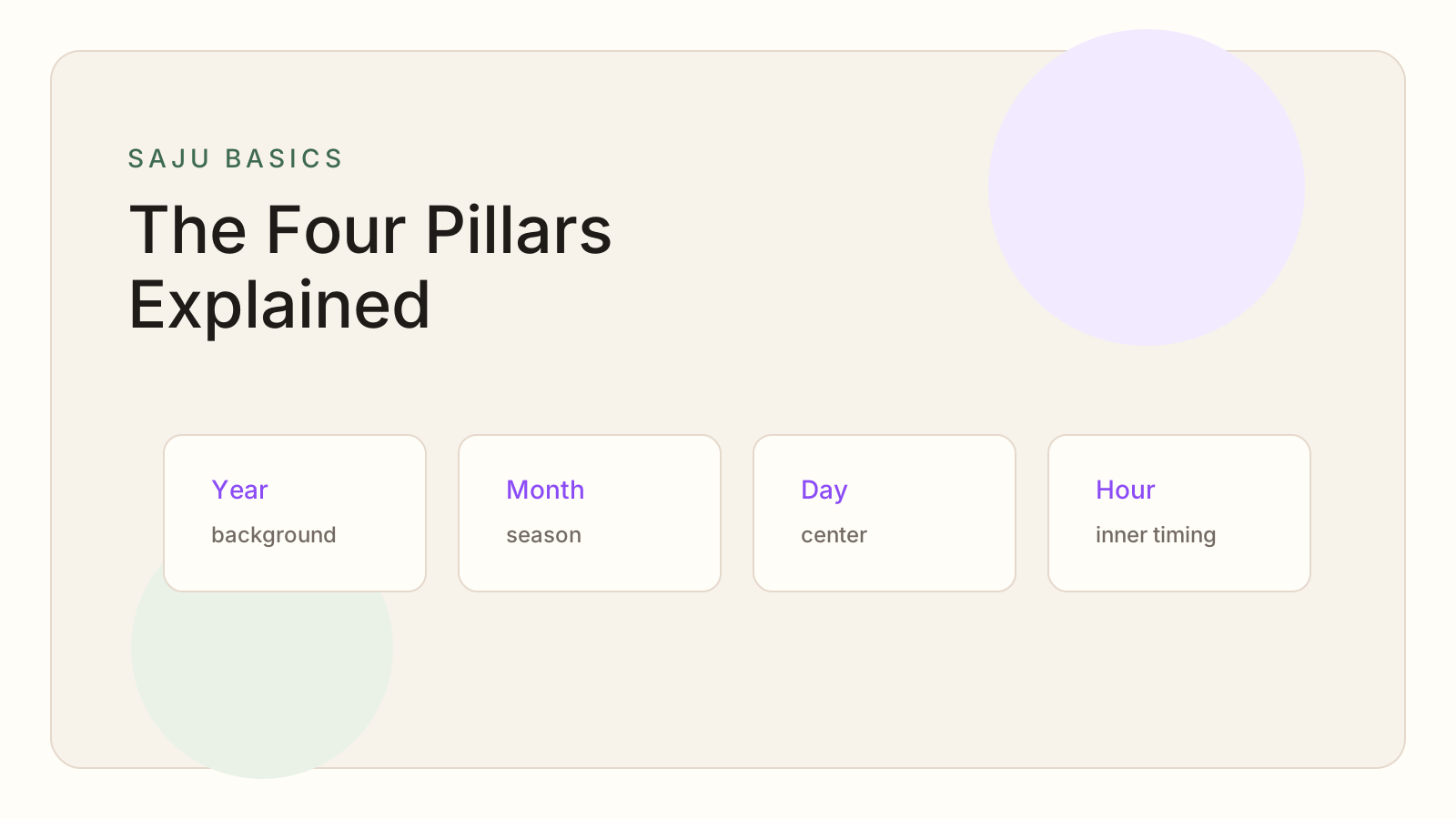
Korean Saju begins with four pieces of birth timing: year, month, day, and hour. These are called the Four Pillars. Each pillar contains a heavenly stem and an earthly branch, which creates a symbolic structure for reading temperament, timing, and repeated patterns.
The Four Pillars are not a set of predictions. They are a map. A useful Saju reading does not ask the map to decide your future. It asks what the map can reveal about your tendencies, your rhythms, and the conditions that help you make clearer choices.
If you are new to Saju, read this alongside What Is Korean Saju? and Saju Is Not Fortune Telling.
The Year Pillar
The year pillar is the broadest layer. It can describe background, inherited context, early social atmosphere, and the larger environment a person comes from.
In older readings, the year pillar is sometimes treated as a family or ancestry layer. In a modern self-understanding reading, it is more useful to treat it as the outer weather of the chart. It does not define the whole person, but it can show the kind of atmosphere surrounding the rest of the structure.
This matters because people do not develop in isolation. A temperament may express itself differently depending on the environment it grows inside. The year pillar helps keep that context in view.
The Month Pillar
The month pillar is often one of the most important layers because it connects to season. Season affects the strength, balance, and expression of the chart’s elements.
For example, a Wood pattern born in spring may feel different from Wood born in late autumn. The symbol is the same, but the environment changes how it behaves. This is why Saju is not just a list of traits. It reads relationships between symbols, seasons, and context.
In practical terms, the month pillar can point to the kind of conditions that shape a person’s operating rhythm. It can show whether a pattern has strong support, whether it needs more structure, or whether it may become too intense without balance.
The Day Pillar
The day pillar is central because it contains the Day Master. The Day Master is the reference point for much of the chart. It is not the whole personality, but it gives the reading a center.
The day pillar can also describe close relationship rhythm, private preferences, and the way a person experiences themselves from the inside. This is why many Saju guides start with the Day Master before moving into other layers.
A safe reading should avoid turning the Day Master into a fixed label. It is better to ask: what kind of temperament does this center suggest, and how does the rest of the chart support, pressure, or redirect it?
The Hour Pillar
The hour pillar depends on birth time. When birth time is known, it can add detail about inner direction, later-life themes, private ambition, creativity, children, or long-range development depending on the reading tradition.
When birth time is unknown, Palza does not force hour-based interpretation. A reading can still be useful with year, month, and day, but it should be honest about what is missing. Good Saju is not about pretending to know more than the data supports.
This is especially important in a product experience. If the input is incomplete, the output should stay clear and respectful.
How the Pillars Work Together
The Four Pillars are not four separate personality boxes. They interact. A strong month pillar can change how the Day Master expresses itself. A branch relationship can create tension or support. Element balance can make a pattern feel smooth, overactive, thin, or blocked.
This is why a responsible reading looks for relationships, not isolated labels. It asks how the chart moves as a whole.
For self-understanding, the most useful questions are simple:
- What pattern seems central?
- What supports that pattern?
- What puts pressure on it?
- Where does the person have natural momentum?
- Where might they need structure, rest, or a clearer boundary?
These questions keep the reading practical.
The Palza Approach
Palza keeps the traditional Four Pillars structure, but translates it into modern language. The goal is to help people understand temperament, emotional rhythm, relationships, work style, money mindset, and choice patterns without fear-based prediction.
The Four Pillars are valuable because they create a structured way to look at a person. The reading becomes useful when that structure turns into clear language for everyday life.
That is the foundation of Palza’s Saju knowledge hub: accurate enough to respect the tradition, practical enough to help someone think more clearly.