
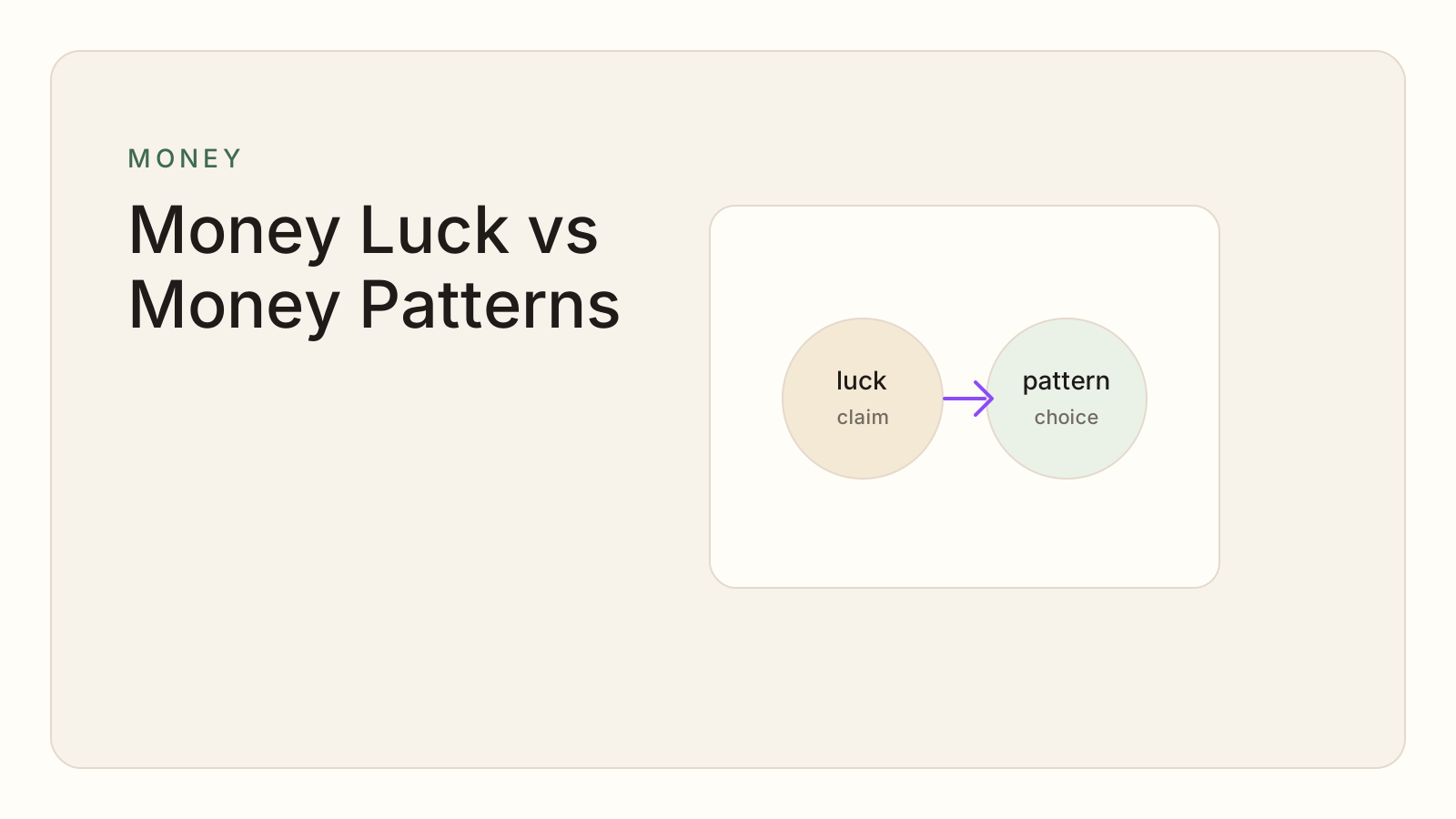
Money Is a Sensitive Topic
Money is one of the areas where Saju language can easily become unsafe. People want clarity about opportunity, risk, income, timing, and security. That makes money readings emotionally powerful.
It also means the language must be careful.
Palza does not use Saju to predict financial outcomes. We do not say someone will become rich, lose money, succeed in investing, or fail in business. We do not use a chart as financial advice.
Instead, we read money through patterns: how someone relates to resources, risk, stability, opportunity, and responsibility.
Money Luck Is Too Easy to Misread
Traditional readings sometimes use language like wealth luck or money luck. That language can be meaningful inside a technical system, but it can be misleading when presented without context.
To a reader, money luck may sound like a promise. It can suggest that money will arrive, that a certain year guarantees gain, or that a person should take more risk because the chart looks favorable.
That is not responsible.
A safer reading translates money luck into money patterns. It asks how the person notices opportunity, manages resources, responds to uncertainty, and balances expansion with stability.
Resource Patterns
In Saju, money themes can be connected to resource movement, external activity, management, responsibility, and the relationship between effort and return.
Some people may be quick to notice opportunities. They can sense where movement is happening and may be energized by flexible resources, deals, projects, or external networks.
Others may be better at steady management. They may prefer predictable systems, clear budgets, reliable accumulation, or careful planning.
Some patterns create strong ambition but need better boundaries. Some create caution but need small experiments. Some create generosity but need clearer limits. Some create discipline but need flexibility when conditions change.
This is where Saju can be useful. It can describe the behavior around money, not promise the result.
Risk and Pace
Money choices are often about pace.
A person with strong opportunity sensing may move quickly when something looks promising. That can be useful, but it can also create exposure if the practical details are not checked. A person with strong stability patterns may protect resources well, but they may also miss opportunities if every decision requires perfect certainty.
Neither pattern is automatically good or bad. Each has a strength and a risk.
The useful question is: what kind of money decision becomes harder when this pattern is under pressure?
What a Safe Money Reading Can Say
A safe Saju money reading can talk about tendencies:
- You may prefer stable accumulation over high-variance risk.
- You may notice external opportunities quickly, but need a stronger review process.
- You may carry responsibility for others and need clearer resource boundaries.
- You may be good at managing practical details, but need room for measured growth.
- You may become reactive around scarcity and need a calmer decision rhythm.
These statements are not financial advice. They are self-understanding prompts.
What Palza Avoids
Palza avoids statements like:
- You will make a lot of money this year.
- This is a lucky investment period.
- You should start a business now.
- You will lose money if you choose wrong.
- Your chart guarantees wealth.
These claims create false certainty. They can push people toward decisions that deserve more evidence, more context, and often professional advice.
Turning the Reading Into Action
The best money insight is practical.
If your pattern is fast-moving, build a pause before major decisions. If your pattern is cautious, test opportunities in smaller steps. If your pattern is generous, define limits before the request appears. If your pattern is ambitious, separate vision from cash flow. If your pattern is stability-focused, make sure protection does not become stagnation.
This is where Saju becomes useful: not by predicting money, but by helping you understand the way you handle it.
The Palza Approach
Palza reads money as resource behavior. We focus on patterns, tradeoffs, and decision support.
A chart can help someone notice how they respond to opportunity, risk, pressure, and security. It should not replace financial judgment.
Money readings are most useful when they make people more grounded, not more impulsive or afraid.
That is the Palza standard for money in Saju: no guarantees, no fear, and no false authority. Just clearer language for the patterns people can observe and improve.