
Saju Should Not Predict Your Job Title
Career is one of the most tempting areas for deterministic Saju readings. People want to know what they are meant to do, what field will make them successful, and whether a certain path is right.
But Palza does not use Saju to predict job titles. A chart should not tell someone they must become a founder, artist, analyst, teacher, investor, or manager. Real careers are shaped by skills, access, timing, education, market conditions, personal choices, and practical constraints.
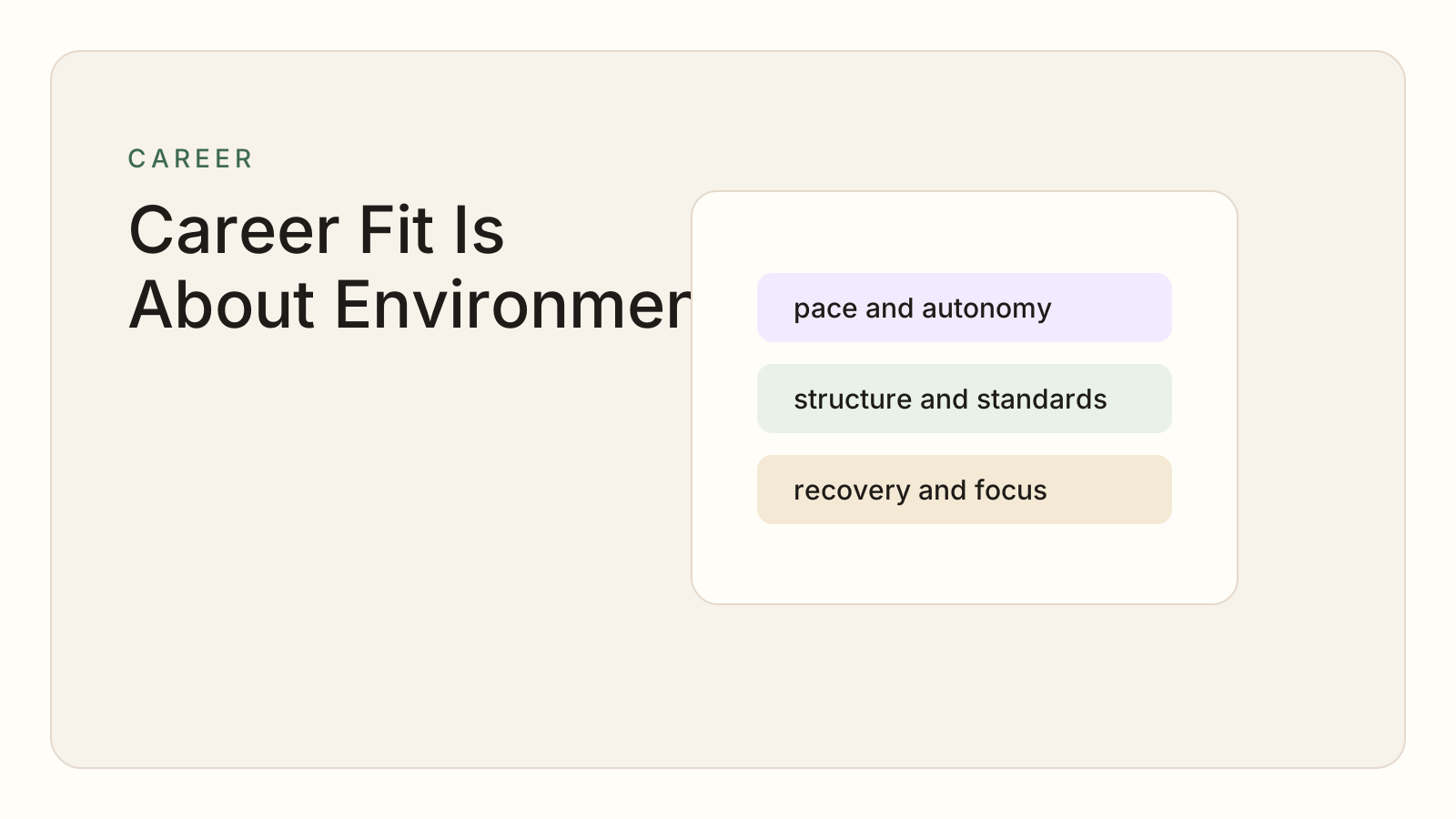
Saju can still be useful for career reflection, but the better question is different: what kind of work environment helps this person’s strengths become visible?
Environment Is More Useful Than Title
Two people can have the same job title and completely different work experiences. One designer may thrive in a fast-moving startup, while another needs deeper research time. One manager may be energized by conflict resolution, while another does best building quiet systems. One analyst may prefer precision and structure, while another is strongest in open-ended strategy.
This is why environment matters.
A Saju reading can describe work rhythm, not career destiny. It can point to preferences around autonomy, structure, pressure, expression, collaboration, pace, and recovery.
That kind of insight is practical because it can be tested in real life.
Work Style Signals
Different chart patterns may point to different work tendencies.
Some people need room to initiate. They become energized when they can start, explore, and move ideas forward. Others need a stable frame. They do better when expectations are clear and quality standards are known.
Some people are strongest when they can express, teach, make, explain, or produce. Others work best when they can refine, manage, protect, analyze, or coordinate. Some respond well to challenge and pressure. Others need space to process before they make strong decisions.
None of these patterns is better than another. The question is fit.
Pressure and Recovery
Career fit is not only about strengths. It is also about what drains a person.
A chart pattern that looks highly capable under pressure may still need deliberate recovery. A person with strong responsibility patterns may become trusted quickly, but also overburdened. A person with strong expression patterns may create momentum, but become frustrated when every output is heavily controlled.
A useful reading should name both sides: where a person performs well and where that performance can become costly.
This is not a warning. It is a maintenance guide.
Collaboration Patterns
Saju can also help describe collaboration style.
Some people prefer clear ownership. Some need dialogue before committing. Some work well with flexible roles. Some need standards, deadlines, and defined authority. Some are strong at opening possibilities, while others are better at finishing, filtering, or stabilizing.
In a team, these differences matter. Many work conflicts are not about ability. They are about mismatched rhythm, unclear decision rights, or different definitions of quality.
When Saju language is used carefully, it can help people talk about those differences without blaming each other.
What Palza Avoids
Palza avoids career predictions that sound absolute:
- You will succeed in this field.
- You should never do this kind of work.
- This year guarantees promotion.
- This chart means you must start a business.
Those statements are too rigid. They turn a reflective system into a false authority.
Instead, Palza focuses on patterns: what kind of environment supports the person, what kind of pressure needs care, and what choices may make work more sustainable.
How to Use This Insight
If you read your Saju for career reflection, use it as a checklist for observation.
Ask:
- Do I need more autonomy or more structure?
- Do I perform better with visible output or quiet depth?
- What kind of pressure sharpens me?
- What kind of pressure drains me?
- Do I need clearer boundaries, more feedback, or more room to experiment?
These questions make the reading practical.
The Palza Approach
Palza reads career through work style, not fate. A good Saju career reading should help someone understand the conditions where their strengths are more likely to work well.
The goal is not to name the perfect job. The goal is to make better choices about environment, role, pace, collaboration, and recovery.
That is a more honest and more useful way to connect Saju with modern work.