
Compatibility Is Not a Verdict
Saju compatibility can be interesting because relationships are one of the places where patterns become visible quickly. The way someone responds to closeness, conflict, responsibility, pressure, and emotional timing often repeats across different relationships.
But compatibility should not be treated as a final verdict. A Saju reading should not decide whether two people must stay together, separate, marry, avoid each other, or trust each other. That gives the chart too much authority and takes too much agency away from the people involved.
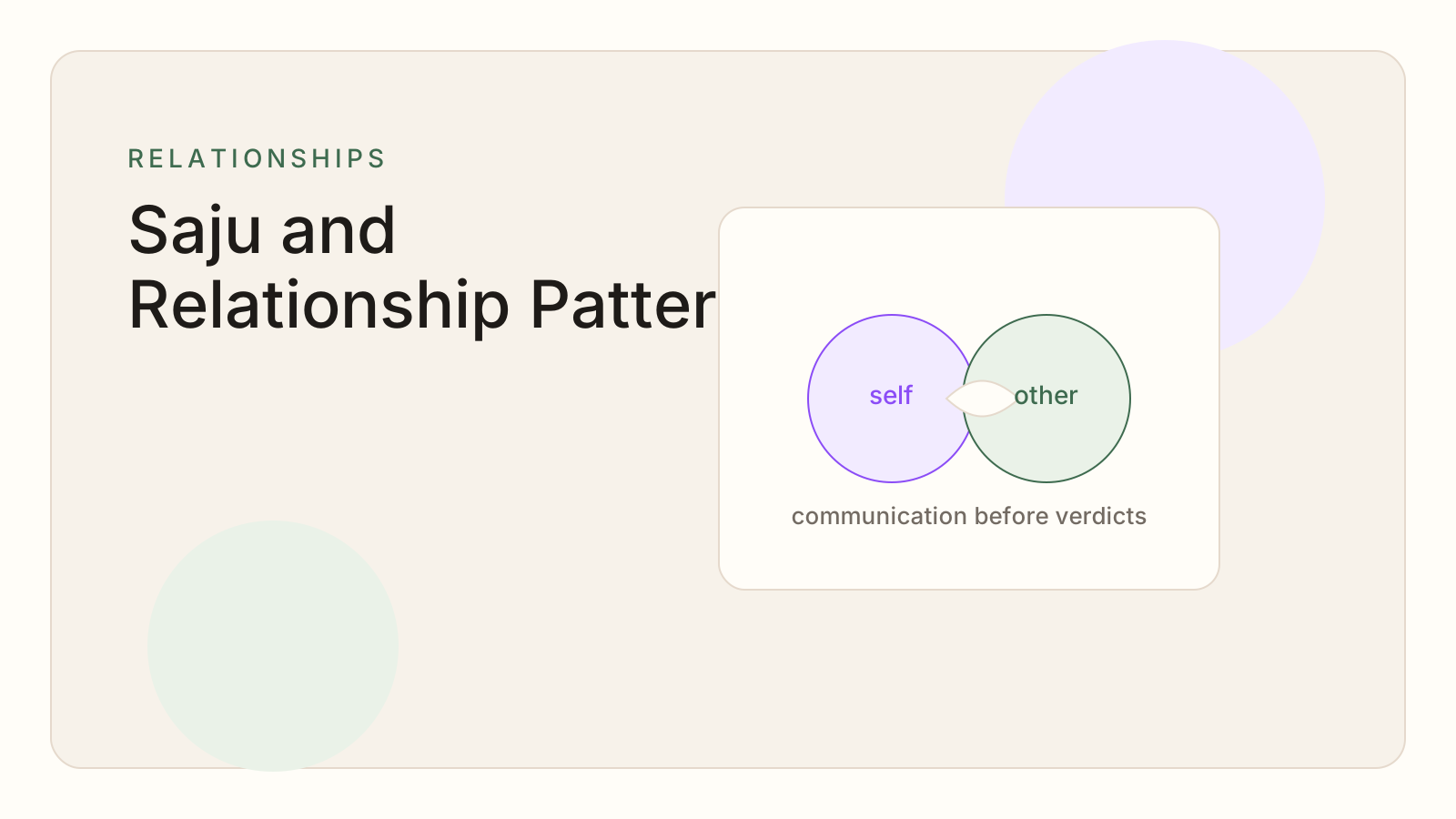
Palza treats compatibility as a conversation aid. The useful question is not, “Is this relationship good or bad?” The better question is, “Where do our patterns support each other, and where do they need clearer communication?”
What a Relationship Reading Can Show
A relationship reading compares two charts across several layers. It may look at element balance, Day Master relationships, Ten Gods, branch relationships, and the broader rhythm of each person’s chart.
Each layer can describe a different kind of interaction.
Element balance may show where one person brings energy the other person lacks. Day Master relationships may describe temperament and pace. Ten Gods may describe roles, responsibility, expression, and pressure. Branch relationships may show where closeness feels smooth, where friction repeats, or where a relationship creates change.
None of these signals is absolute by itself. A strong connection in one layer does not erase tension in another. A difficult signal does not make the relationship doomed. The value comes from reading the pattern as a whole.
Matching Points
Matching points are places where two people naturally support each other.
One person may bring structure where the other brings movement. One may bring warmth where the other brings focus. One may help create stability while the other notices opportunity. In work or friendship, this can become a strong division of roles. In a close relationship, it can feel like being balanced by someone with a different rhythm.
A good reading should explain these matching points without exaggerating them. “This is easy to work with” is better than “This is destiny.” Support is meaningful, but it still needs attention.
Friction Points
Friction points are not failures. They are places where the relationship asks for more awareness.
Some friction comes from pace. One person may move quickly while the other needs time to process. Some friction comes from role overlap. Two people may both want to lead, decide, or protect the same space. Some friction comes from emotional timing. One person may want direct conversation while the other needs privacy before responding.
These patterns can create tension, but tension is not automatically bad. In some relationships, friction creates growth. In others, it becomes exhausting because the same issue never gets named clearly.
The difference is not the chart alone. It is how the people handle the pattern.
Relationship Type Matters
The same Saju combination can read differently depending on the relationship type.
A pattern that feels exciting in romance may feel unstable in business. A pattern that creates productive challenge between colleagues may feel too sharp in family life. A strong responsibility pattern can be valuable in a long-term partnership, but it can also become pressure if one person feels they must carry everything.
That is why Palza does not read compatibility as one universal score. Relationship context matters. The question is always: what is this relationship trying to do?
A Safer Way to Use Compatibility
Use compatibility as a way to prepare better conversations.
If a reading says two people may have different pacing, ask how each person prefers to make decisions. If it shows role overlap, talk about ownership and boundaries. If it shows emotional sensitivity, create space for slower responses. If it shows strong support, notice what is working and protect it.
This turns Saju from a judgment tool into a practical mirror.
The Palza Approach
Palza’s relationship language avoids fear-based claims. We do not tell people that a relationship is doomed, that someone is the only right match, or that a chart can replace trust and communication.
Instead, we describe patterns: matching points, friction points, communication style, and practical advice.
A good relationship reading should leave people with more clarity and less fear. It should help them understand the relationship they are actually living, not outsource that relationship to a symbolic system.
That is the Palza standard: compatibility as self-understanding between people.