
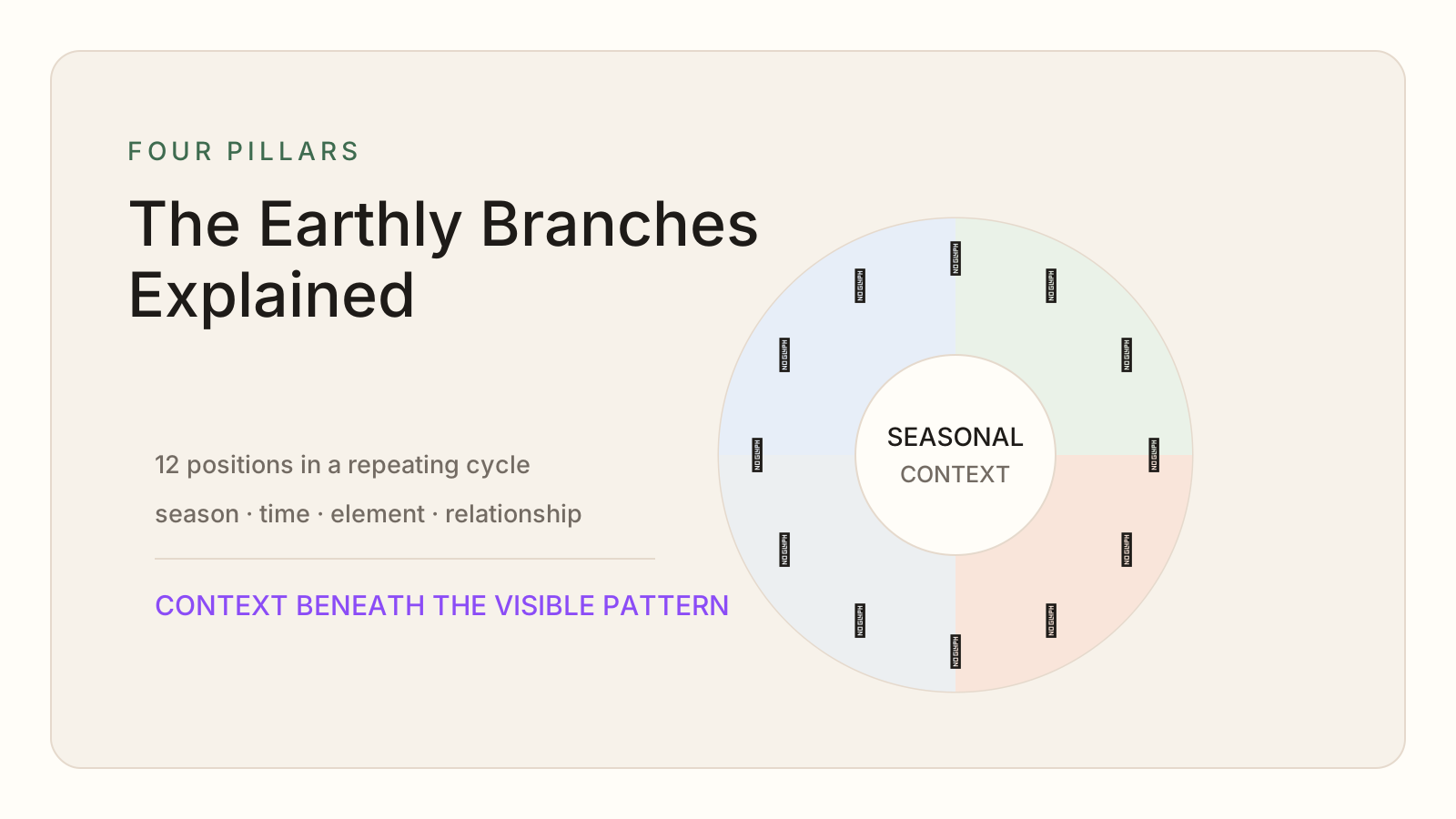
Introduction: The Lower Character Holds Context
Every pillar in a Korean Saju chart has two characters. The Heavenly Stem appears above; the Earthly Branch sits below. If stems make an element’s expression visible, branches add a denser layer of timing, season, and relationship.
There are twelve Earthly Branches. Many people recognize them through the zodiac animals—Rat, Ox, Tiger, and so on—but the animal names are only a familiar memory system. In Saju, a branch is not a mascot and does not define a personality. It marks a position in a repeating cycle and carries elemental and seasonal information.
To see where branches sit, start with The Four Pillars Explained or the visual structure in What Is a Saju Birth Chart?. Each year, month, day, and hour pillar contains one branch, giving a complete chart four visible branches.
The Twelve Branches as a Cycle
The branches follow this fixed order:
- 子 Rat — Yang Water: midwinter
- 丑 Ox — Yin Earth: late winter
- 寅 Tiger — Yang Wood: early spring
- 卯 Rabbit — Yin Wood: midspring
- 辰 Dragon — Yang Earth: late spring
- 巳 Snake — Yin Fire: early summer
- 午 Horse — Yang Fire: midsummer
- 未 Goat — Yin Earth: late summer
- 申 Monkey — Yang Metal: early autumn
- 酉 Rooster — Yin Metal: midautumn
- 戌 Dog — Yang Earth: late autumn
- 亥 Pig — Yin Water: early winter
The cycle makes an important point: branches are grounded in change over time. Wood rises through spring, Fire becomes visible through summer, Metal clarifies through autumn, and Water gathers through winter. Earth branches appear at transitions between major seasonal phases, helping one movement settle and another begin.
This does not mean everyone born in spring behaves like Wood. The month branch gives strong seasonal context, but a chart includes eight characters and many relationships. The Five Elements in Saju explains why elements are better understood as functions and processes than as fixed traits.
Branches Mark Months, Hours, and More Than Animals
The same twelve-part sequence is used across several forms of traditional timekeeping. Branches identify years, but they also organize months and two-hour periods of the day. That is one reason an hour pillar can add detail when an accurate birth time is available.
In a Saju chart, the month branch is especially important because it locates the chart within the seasonal cycle. The difference between an element appearing in its supportive season and appearing in a less supportive season can change how a reader understands its available momentum.
The animal labels can make the sequence easier to remember, yet they can also encourage simplistic descriptions such as “Dragon people are ambitious” or “Rabbit people avoid conflict.” Those claims isolate one branch from its pillar, season, hidden contents, and the rest of the chart. They also turn a contextual symbol into a horoscope label.
A better question is: what timing and elemental conditions does this branch contribute here? That keeps the branch connected to the chart it actually belongs to.
Why Branches Are More Layered Than Stems
Each visible stem presents one element and one polarity. A branch has a main element and polarity too, but it may also contain one or more hidden stems. These hidden stems describe additional elemental activity held within the branch.
You do not need to memorize the hidden stems to begin reading Saju. Their presence simply explains why a branch cannot always be reduced to the single element shown in a beginner table. A late-season Earth branch, for example, also participates in transition and may retain qualities of the season it is closing.
This layered structure is one reason counting visible elements is only a first step. Two charts with the same surface count can function differently because their branches occur in different seasons or contain different internal relationships. A responsible reading considers quality, position, and support—not just quantity.
The Heavenly Stems Explained describes the clearer upper layer of each pillar. Reading stems and branches together reveals the basic tension of the chart: what is visible above and what conditions, roots, or complicates it below.
Branch Relationships Describe Dynamics
Branches can form traditional relationships often translated as combinations, clashes, harms, or penalties. These terms sound dramatic in English, but they should not be treated as event predictions or simple good-versus-bad scores.
A combination may suggest that two parts of the chart readily organize around a shared movement. A clash may describe competing directions, change, or friction. Either can be constructive or difficult depending on where it appears, what else supports it, and how the person responds.
Think of a workplace preference. One branch pattern might contribute a need for consistent process while another contributes rapid movement. In a well-designed environment, the tension can produce thoughtful iteration: act, review, adjust. In a poorly matched environment, the same difference may feel like repeated interruption. The chart identifies a dynamic worth observing; it does not dictate the outcome.
This contextual approach also matters in relationships. A branch interaction cannot declare two people compatible or incompatible. Communication habits, safety, consent, shared values, and circumstances carry far more information than a single symbolic relationship.
Reflection Questions for Branch Patterns
Branches invite questions about conditions and timing:
- What environments help my familiar patterns feel rooted and usable?
- Where do I notice a recurring pull between stability and movement?
- Does a point of friction create useful adjustment, or does it repeatedly drain attention?
- What context is missing when I am tempted to label a pattern as simply good or bad?
These prompts do not require translating every branch relationship. They encourage the central skill behind a careful Saju reading: observing how a pattern changes when its environment changes.
Conclusion: Read the Ground Beneath the Pattern
The twelve Earthly Branches connect a Saju chart to cyclical time. They mark seasonal positions, contribute elemental context, contain hidden layers, and form relationships with one another. The zodiac animals can help you remember the sequence, but they are not personality verdicts.
Branches are most useful when they remind us that no visible tendency exists without conditions beneath it. A pattern may gain support, meet resistance, or change form across different environments. Recognizing that context does not fix the future; it creates more informed choices in the present.
If you want to explore how the branches interact with the stems and pillars in your own chart, Palza presents Saju as a practical language for self-understanding rather than prediction.